
Understanding dog breed longevity means going beyond old wives’ tales and looking at real epidemiological data. Domestic dogs (Canis lupus familiaris) show enormous physical diversity — from skeletal build to skull shape — and this diversity directly shapes how long individual breeds tend to live.
Large-scale studies using survival analysis tools such as Kaplan-Meier curves and Cox proportional hazards models now give us a much clearer picture of how evolutionary history, breeding bottlenecks, and artificial selection influence mortality risk in companion dogs.
The Genetic Landscape Behind Dog Breed Longevity
Veterinary epidemiologists group dog populations by structural, genetic, and demographic variables to study longevity accurately. Artificial selection has produced closed breeding populations with limited genetic diversity. Repeated use of popular sires and strict pedigree rules have amplified harmful recessive mutations and breed-specific diseases over time.
Key factors influencing dog breed longevity include:
| Category | Examples |
|---|---|
| Morphological | Body size, cephalic index (skull shape) |
| Genetic & Lineage | Phylogenetic clade, inbreeding coefficient |
| Demographic | Sex differences, spay/neuter status |
Purebred vs. Crossbred Dogs: Who Lives Longer?
The idea of “hybrid vigor” suggests mixed-breed dogs automatically outlive purebreds. The data tells a more nuanced story.
- Median survival baseline: Large UK cohort studies report an overall median survival of 12.5 years across all dogs. Purebreds reached a median of 12.7 years, compared to 12.0 years for crossbreds in some registries.
- Breed-by-breed variation: About 47.1% of purebred breeds studied actually outlive the average crossbred dog, while 25.8% show noticeably shorter lifespans.
- The takeaway: Crossbred longevity depends heavily on generation type (F1 vs. multi-generational mixes) and the specific breeds in the ancestry — it isn’t a guaranteed advantage.
Body Size and Skull Shape: The Strongest Predictors
Morphology is one of the most reliable statistical predictors of how long a dog will live.
Body Size and Lifespan
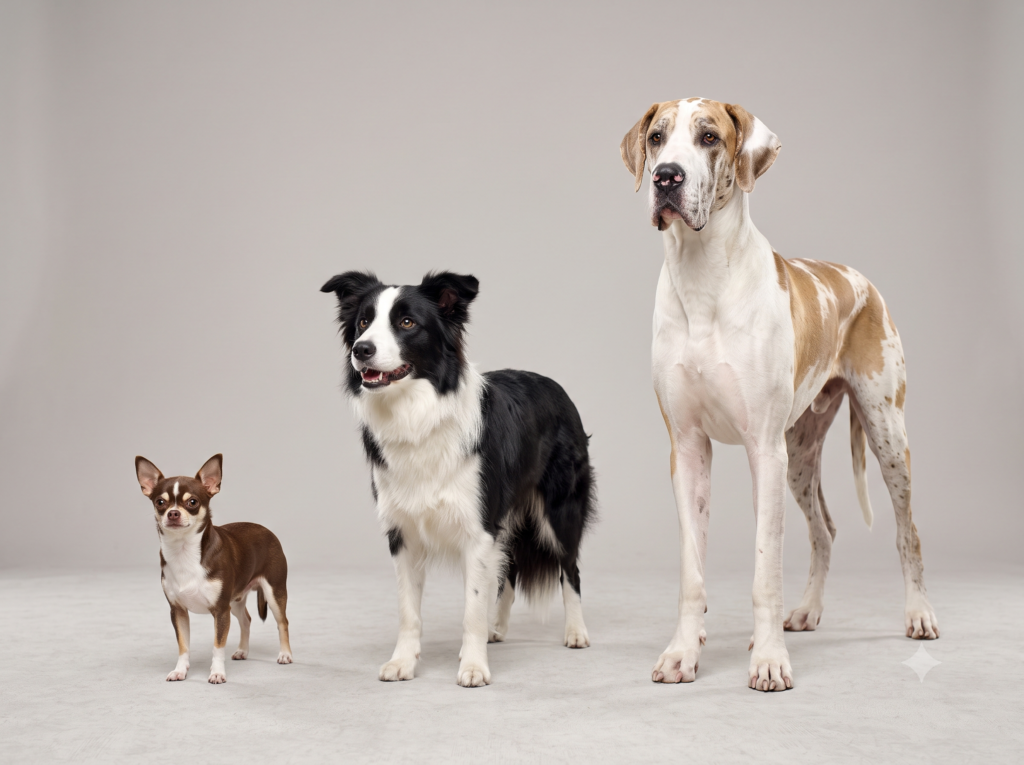
As with many mammals, larger body size correlates with a shorter lifespan in dogs:
- Small breeds: median survival of 12.7 years
- Medium breeds: median survival of 12.5 years
- Large and giant breeds: median survival often drops to 11.9 years or lower
Faster cellular growth, higher metabolic rates, and accelerated development in large breeds appear to drive earlier aging and health decline.
Cephalic Index: Why Skull Shape Matters
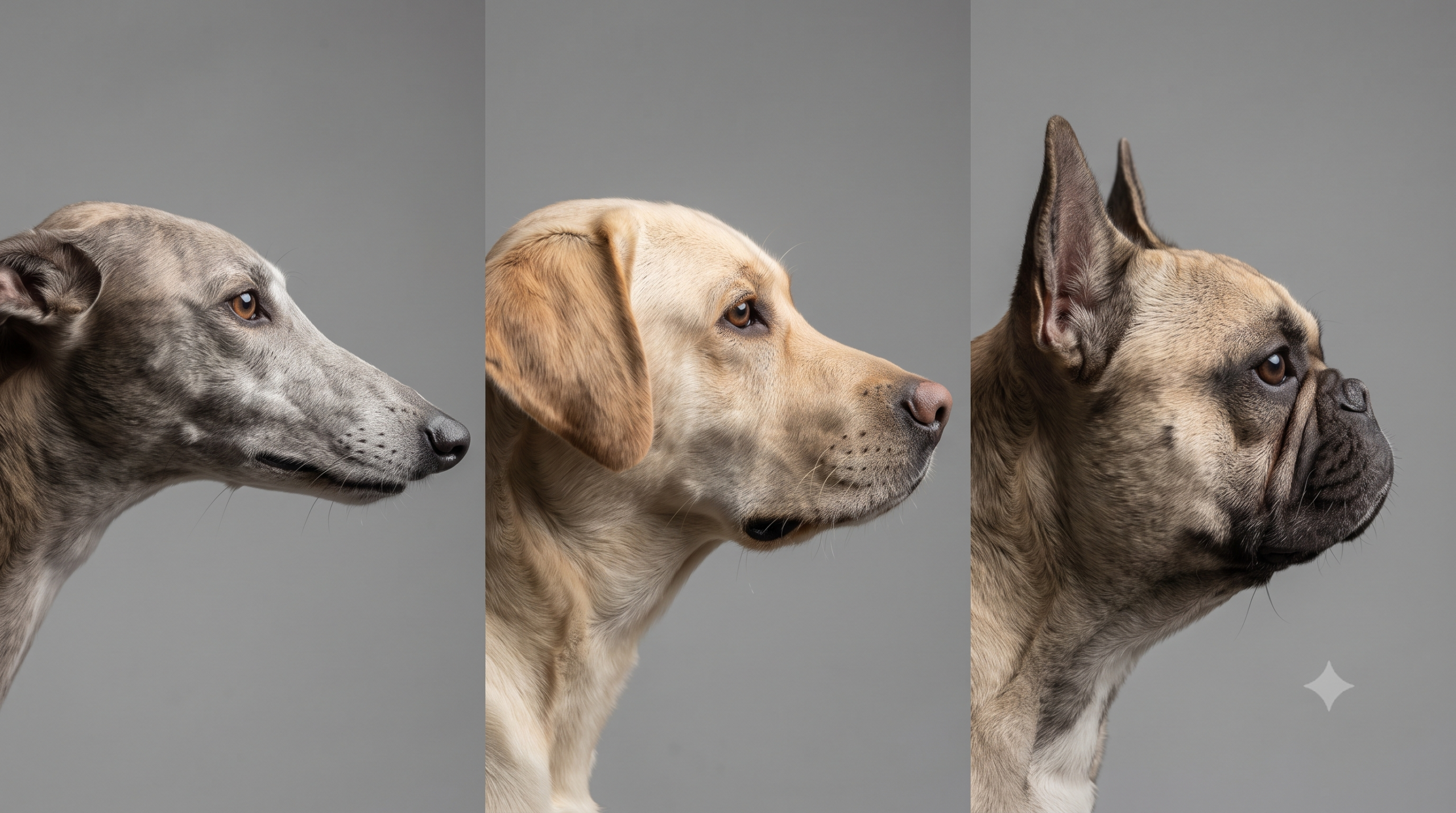
Skull shape (the cephalic index) is another major factor in dog breed longevity:
- Mesocephalic (medium-muzzled) breeds: highest median survival at 12.8 years
- Dolichocephalic (long-muzzled) breeds: strong survival, averaging 12.1 years, with small long-muzzled females reaching up to 13.3 years
- Brachycephalic (flat-faced) breeds: shortest median lifespan at 11.2 years
Medium-sized brachycephalic dogs face a 2.85-fold higher hazard of early death compared to small, long-muzzled dogs — largely due to breathing difficulties, cardiovascular strain, and spinal issues linked to their conformation.
Phylogenetic Clades: Evolutionary Roots of Lifespan

Using Pagel’s lambda (λ = 0.808), researchers found that dog breed longevity carries a strong phylogenetic signal — meaning lifespan is tied to evolutionary lineage, not random chance.
Lower-longevity clades:
- Mastiff and Bulldog lineages: median lifespans of 9.0–9.8 years, high risk of brachycephalic airway syndrome
- Molosser breeds: Presa Canario (7.7 years), Cane Corso (8.1 years)
- Caucasian Shepherd: among the lowest survival rates of any clade
Higher-longevity clades:
- Small terrier and spitz-type breeds show notably better outcomes:
- Lancashire Heeler — 15.4 years
- Shiba Inu — 14.6 years
- Border Terrier — 14.2 years
What This Means for Veterinary Research and Dog Owners
Separating genetics from lifestyle and care requires combining clinical trials, microbiome research, and biomarker studies. The future of canine health is shifting toward healthspan — not just how long a dog lives, but how well it lives.
Current research priorities include:
- Epigenetic clocks and biomarkers — tracking DNA methylation, telomere length, and inflammation markers to detect aging before symptoms appear
- Microbiome and metabolic profiling — studying gut health and metabolism, especially in large breeds prone to faster aging
- Targeted interventions — using long-term studies to test how diet and lifestyle changes affect risk in high-risk breeds
Frequently Asked Questions
How does dog breed longevity vary between small and large dogs? Dog breed longevity is inversely related to body size. Small breeds live around 12.7 years on average, while large and giant breeds often see median lifespans of 11.9 years or less.
What role does cephalic index play in canine lifespan? Skull shape matters: mesocephalic and dolichocephalic dogs tend to outlive brachycephalic (flat-faced) breeds, which face higher risks of airway and cardiovascular problems.
Are crossbred dogs guaranteed to live longer than purebred dogs? No. While genetic diversity can help, studies show nearly half of purebred breeds have longer median lifespans than the average crossbred dog. Lifespan depends more on body size, ancestry, and individual health factors than on purebred vs. crossbred status alone.
Sources
- McMillan, K. M., Bielby, J., Williams, C. L., Upjohn, M. M., Casey, R. A., & Christley, R. M. (2024). Longevity of companion dog breeds: those at risk from early death. Scientific Reports, 14(1), 531.
- Teng, K. T., Brodbelt, D. C., Pegram, C., Church, D. B., & O’Neill, D. G. (2022). Life tables of annual life expectancy and mortality for companion dogs in the United Kingdom. Scientific Reports, 12(1), 6415.
- Lewis, T. W., Wiles, B. M., Llewellyn-Zaidi, A. M., Evans, K. M., & O’Neill, D. G. (2018). Longevity and mortality in Kennel Club registered dog breeds in the UK in 2014. Canine Genetics and Epidemiology, 5(1), 10.
- Roccaro, M., Salini, R., Pietra, M., et al. (2024). Factors related to longevity and mortality of dogs in Italy. Preventive Veterinary Medicine, 225, 106155.
- Urfer, S. R., Kaeberlein, M., Promislow, D. E. L., & Creevy, K. E. (2020). Lifespan of companion dogs seen in three independent primary care veterinary clinics in the United States. Canine Medicine and Genetics, 7(1), 7.
Disclaimer: This article is for educational and informational purposes only and does not constitute veterinary medical advice, diagnosis, or treatment. Always consult a qualified veterinary professional regarding specific health concerns or breeding decisions for your animals.



One Comment