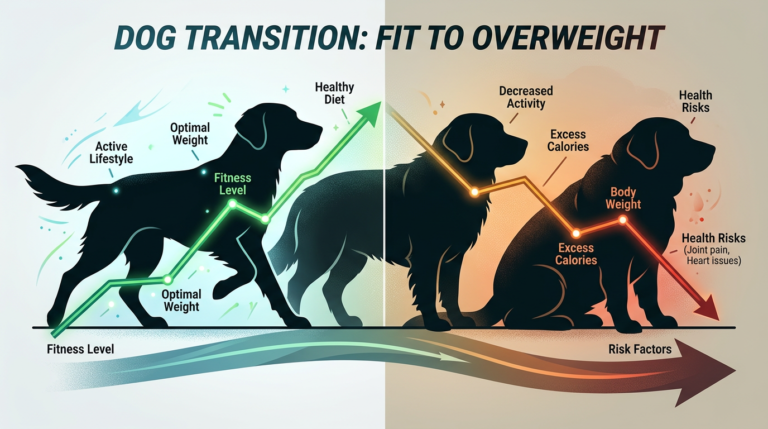
Senior dog health tracking is one of the most important habits you can build if you share your life with an older dog. You know the quiet beauty of their senior years — the graying muzzle, the extra naps in warm sunbeams, and the cozy routine you’ve built together.
But as our companions cross into their golden years, a subtle question often creeps in: Are they just slowing down because they’re getting older, or are they actually sick or in pain?
If you’ve ever explained away a slower walk, a stiff morning wake-up, or a strange new habit with “well, they’re just getting old,” you’re not alone — most dog owners make this exact assumption.
Recent research in veterinary geroscience (the study of aging in animals) reveals something important for senior dog health tracking: aging itself is not a disease. Many changes we chalk up to natural aging are actually manageable medical conditions or early signs of cognitive decline.
This guide breaks down the latest science-backed tools, common hidden symptoms, and expert monitoring strategies to help your senior dog live a comfortable, happy life.
1. The “Just Old Age” Trap: Why We Miss the Warning Signs
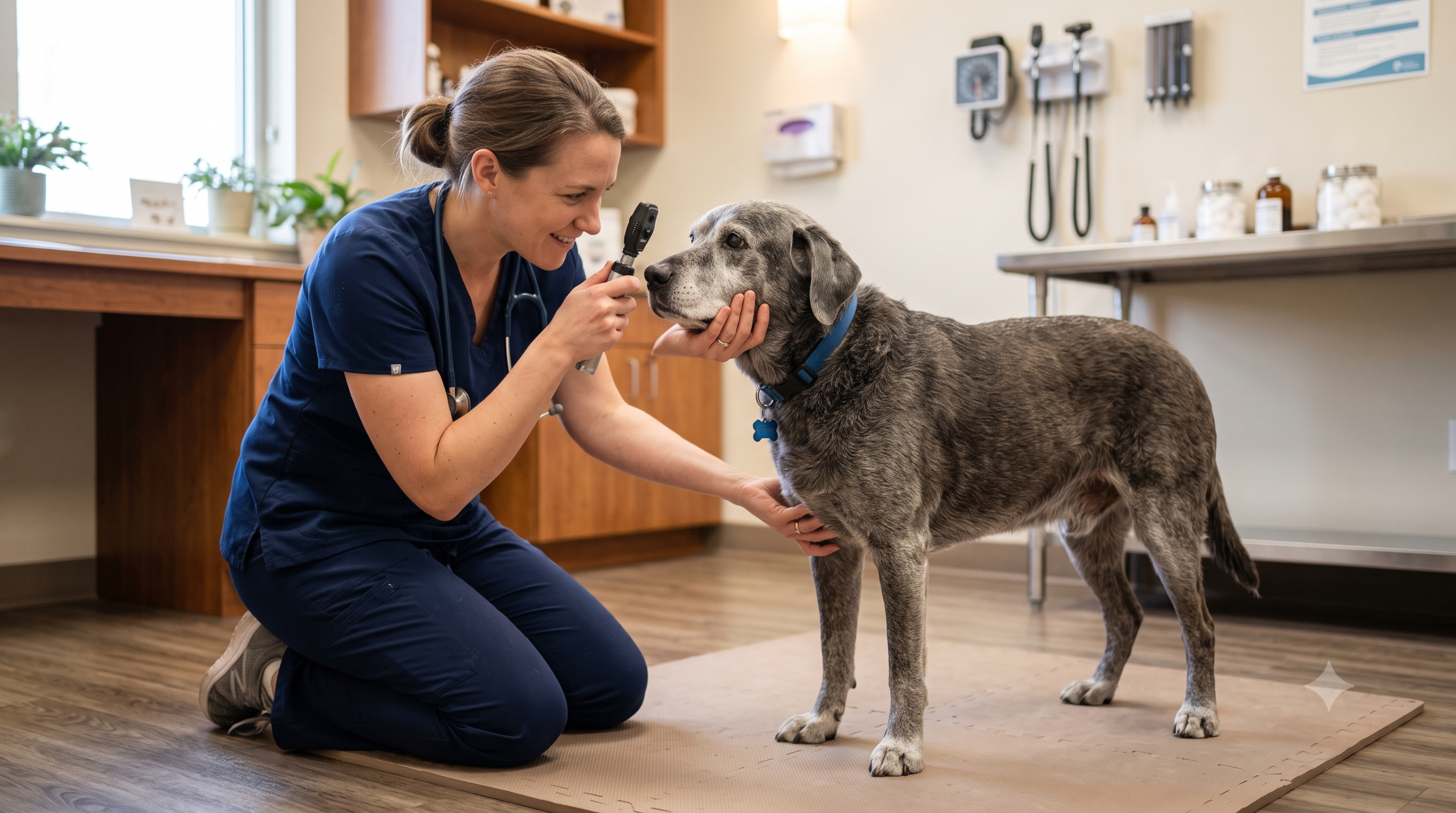
Veterinary researchers consistently find that pet parents struggle to recognize early signs of age-related disease. Studies by Davies (2012) and Wallis et al. (2023) show that owners routinely miss subtle indicators of discomfort, assuming energy loss or behavioral shifts are simply an inevitable part of aging.
When Davies (2012) performed thorough clinical exams on 45 “apparently healthy” senior dogs — dogs whose owners reported no major concerns — the results were eye-opening:
- 80% of the dogs had at least one previously unrecognized medical problem
- Veterinarians discovered an average of 7.8 clinical findings per dog
- Common hidden issues included early cataracts, undetected heart murmurs, skin masses, high blood pressure, and dental disease
Key takeaway: Just because your dog isn’t crying out or limping noticeably doesn’t mean they’re 100% healthy. Dogs are masters at hiding chronic discomfort.
2. Senior Dog Health Tracking: The Science and Tools You Can Use at Home
Catching health issues early requires a structured approach to senior dog health tracking — and you don’t need a veterinary degree to do it. Researchers have developed validated, owner-completed questionnaires that turn daily observations into actionable medical data.
A 2026 study by Schmid et al., evaluating data from the Dog Aging Project (Creevy et al., 2022), found that owner-reported health histories show 90% or higher agreement with official veterinary electronic medical records across major disease categories, including endocrine, immune, and orthopedic health.
Scientifically Validated Senior Dog Assessment Tools
| Tool Name | What It Assesses | How It Works & Key Findings |
|---|---|---|
| CCAS (Canine Cognitive Assessment Scale) | Cognitive impairment & brain health | Evaluates owner-reported behavioral shifts; cognitive decline correlates strongly with musculoskeletal and neurological changes (Wrightson et al., 2023) |
| DISHAA | Behavioral & cognitive decline | Rates frequency of changes across 5 areas: Disorientation, Interaction shifts, Sleep-wake disruptions, House soiling, and Anxiety (McKenzie et al., 2022; Saral et al., 2026) |
| HCPI (Helsinki Chronic Pain Index) | Chronic pain & mobility issues | Focuses on subtle stiffness and mood changes; owners often underestimate pain despite rating quality of life high (Saral et al., 2026) |
| CAN-COM | Side effects & daily quality of life | Built for ongoing daily monitoring — fatigue, thirst, appetite loss — during treatment or chronic illness (Harris et al., 2025) |
| PetSavers Ageing Toolkit | Comprehensive senior health | Developed from joint owner-and-vet research to standardize home tracking for early intervention (Jackson et al., 2024; Wallis et al., 2023) |
3. Senior Dog Health Tracking in Practice: Common Symptoms and When They Appear
Effective senior dog health tracking starts with knowing what to look for. Wallis et al. (2024) conducted extensive surveys mapping out when and how common symptoms emerge in companion dogs.
Typical onset of senior symptoms:
| Age Range | Symptom | Prevalence |
|---|---|---|
| 6–10 years | Dental tartar & bad breath | 52–53% |
| 9–13 years | Slowing down on walks | 57% |
| 11–14 years | Increased sleeping & restlessness | 32% |
| 11+ years | Sensory loss (hearing/sight) | 29% / 27% |
A Closer Look at the Symptoms
- Slowing down on walks (57%): The most commonly reported sign (Wallis et al., 2024). While often assumed to be simple tiredness, it’s frequently linked to osteoarthritis, spinal discomfort, or cardiac fatigue.
- Dental tartar & halitosis (52–53%): Can emerge as early as age 6. Severe dental disease isn’t just about bad breath — it causes systemic inflammation that can harm the kidneys, liver, and heart.
- Increased sleeping (32%): Most common between 11 and 14 years old (Davies, 2012). Dramatic sleep changes often signal pain or neurological changes rather than normal tiredness.
- Sensory loss (27–29%): Gradual hearing and vision changes are widespread but frequently go undiagnosed during basic wellness exams unless specifically evaluated (Wallis et al., 2024).
4. Unmasking Dog Dementia: Cognitive and Behavioral Changes
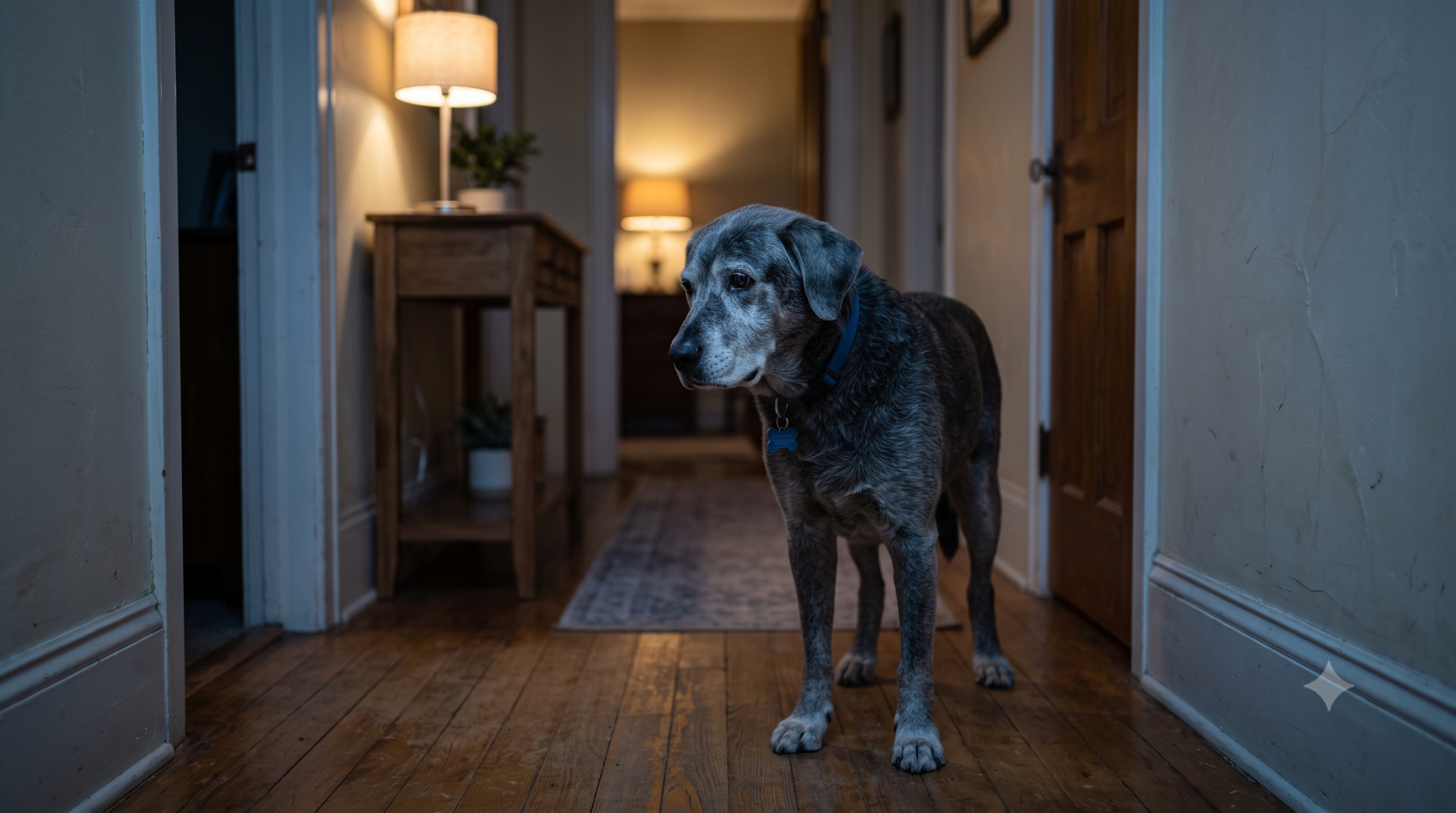
Behavioral shifts are often the very first indicators of physical or neurological issues in aging pets (Landsberg et al., 2011). Yet Canine Cognitive Dysfunction (CCD) — often called “dog dementia” — remains severely underdiagnosed.
A study by Svicero et al. (2017) evaluating 800 senior dogs found that 90.7% exhibited at least one major behavioral change. The most prevalent were:
- Altered physical activity levels (58.5%)
- Loss of acquired training or house-soiling (30.2%)
CCD vs. Normal Aging: Spotting the Difference
According to Dog Aging Project research, dogs diagnosed with CCD show patterns that split clearly from normal, healthy aging (Fisher et al., 2026):
- Severe sleep-wake cycle shifts: wandering or pacing at night, heavy daytime sleeping
- Increased separation anxiety: unusually needy, clingy, or panicked when left alone
- Altered social responses: irritability, unexplained aggression toward housemates, or sudden withdrawal
- Depressed physical activity: a sharp drop in spontaneous movement and exploration (Bray et al., 2022)
The physical activity connection: Bray et al. (2022) found a strong negative correlation between physical exercise and cognitive decline. Dogs with lower daily activity levels were significantly more likely to show severe cognitive dysfunction — keeping your senior dog’s body gently moving helps keep their mind sharp.
One of the most important findings in modern veterinary research is how closely chronic pain mirrors cognitive decline.
When a dog becomes irritable, stops playing, paces nervously, or acts aggressively, owners often attribute it to “getting grumpy in old age.” However, Saral et al. (2026) showed pain is a massive confounding factor:
- 100% of senior dogs studied scored above the threshold for chronic pain on the Helsinki Chronic Pain Index (HCPI)
- Yet their owners still rated the dog’s quality of life as high and failed to recognize the pain scores
Because caregiver perception often underestimates pain, researchers now recommend combining owner-reported tools with objective biomarkers — such as Brain-Derived Neurotrophic Factor (BDNF) levels, immune system ratios (Th1/Th2), and gut microbiota composition (Saral et al., 2026).
6. The Modern Framework for Senior Dog Health Tracking: Canine Geriatric Syndrome (CGS)
To bridge the gap between what owners see at home and what vets test in the clinic, researchers have proposed a comprehensive clinical model called Canine Geriatric Syndrome (CGS) (McKenzie et al., 2022). This framework has become central to modern senior dog health tracking because it treats aging as a connected system rather than isolated symptoms.
Rather than treating aging as a series of isolated problems — just arthritis, or just kidney disease — CGS treats the dog as a complete system, combining:
- Physical function & frailty
- Behavior & brain health
- Metabolic & organ health
- Caregiver burden & quality of life
The CGS framework brings together:
- At-home screening — DISHAA and pain questionnaires completed by the owner
- Clinical exams — bi-annual physical exams, gait analysis, and blood pressure checks
- Biomarker panels — blood work, urinalysis, and emerging frailty/kidney diagnostics (Marynissen et al., 2025)
- Longitudinal science — data from large-scale initiatives like the Dog Aging Project (Creevy et al., 2022), tracking tens of thousands of dogs to understand healthy longevity
7. A Senior Dog Health Tracking Checklist for Dog Parents
Here’s a simple, science-based roadmap for putting senior dog health tracking into practice today.
Shift to Bi-Annual Vet Visits
Veterinary consensus recommends check-ups every 6 months for senior dogs. Yet survey data shows 47% of owners believe an annual visit is enough, and 14% only go to the clinic when their dog looks visibly sick (Wallis et al., 2024). Since dogs age roughly 4–7 years for every human year, 6 months is a long time for subclinical changes to develop.
Take a Monthly “Home Health Inventory”
Set a reminder on the 1st of every month to check:
- Is my dog taking longer to get up after lying down?
- Are they pacing, staring into corners, or barking at nothing?
- Has their sleep routine shifted? Are they restless between midnight and 5 AM?
- Are they slipping on hardwood floors or hesitating before jumping into the car?
- Have their eating or drinking habits changed unexpectedly?
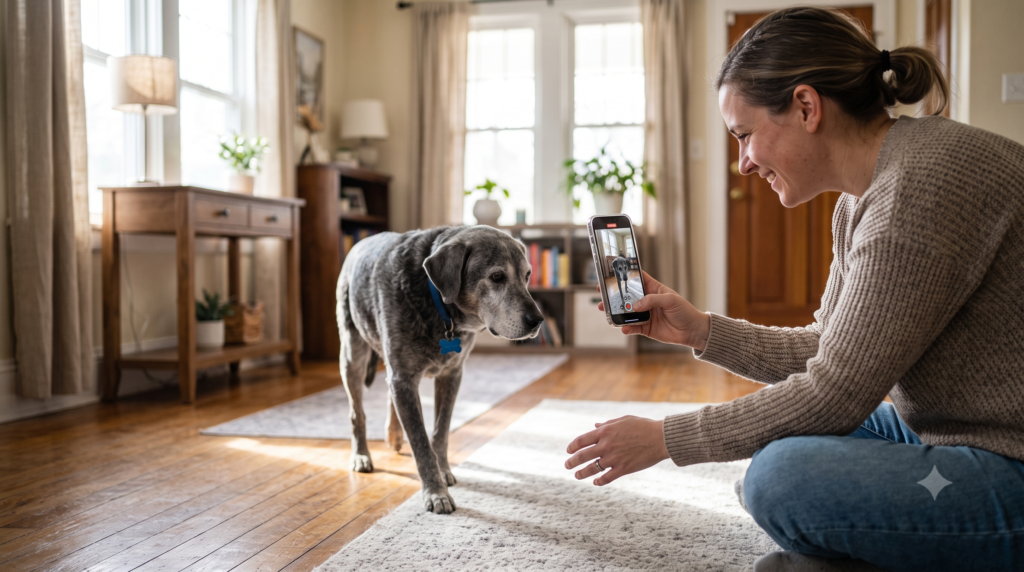
Record Video Footage
If your dog shows odd behavior at home — pacing, morning stiffness, unusual sleeping positions — take a short video. Dogs often get an adrenaline spike at the vet clinic that masks pain and behavioral symptoms, so footage from home gives your vet valuable diagnostic clues.
Prioritize Gentle Daily Exercise
Don’t stop walking just because your dog is older. Short, frequent, low-impact strolls boost circulation, maintain muscle mass, support joint health, and protect brain function (Bray et al., 2022).
Final Thoughts: Changing the Narrative on Aging
Getting old is a privilege — for us and for our dogs. While we can’t stop the clock, modern veterinary science gives us the tools to make those golden years vibrantly healthy, comfortable, and full of joy.
The next time your senior dog moves a little slower or acts a bit differently, don’t write it off as “just old age.” Take a closer look, run through a quick screening checklist, and partner with your veterinarian. Consistent senior dog health tracking — a joint supplement, tweaked pain management, a diet change, or added cognitive enrichment — can add years of comfort to your best friend’s life.
Frequently Asked Questions
How do I know if my senior dog’s slowing down is normal aging or a medical problem? Because dogs are skilled at hiding discomfort, “normal aging” and undiagnosed illness often look identical from the outside. Studies show 80% of dogs assumed to be healthy actually have at least one unrecognized medical issue. The safest approach is regular veterinary screening combined with structured at-home tracking tools like DISHAA or the Helsinki Chronic Pain Index.
What is Canine Geriatric Syndrome (CGS)? CGS is a clinical framework that treats aging as an interconnected system — physical function, brain health, organ health, and caregiver quality of life — rather than a set of separate problems, combining at-home screening, clinical exams, and biomarker testing.
How often should senior dogs see the vet? Veterinary consensus recommends check-ups every 6 months for senior dogs, since subclinical changes can develop quickly given a dog’s accelerated aging rate.
Can chronic pain look like dementia in older dogs? Yes. Research shows pain and cognitive decline can produce very similar behavioral changes — irritability, reduced play, pacing — making it essential to rule out pain before assuming cognitive decline.
References & Sources
- Ambrosi, C., et al. (2018). Randomized controlled study on the effectiveness of animal-assisted therapy on depression, anxiety, and illness perception in institutionalized elderly. Psychogeriatrics, 19. https://doi.org/10.1111/psyg.12367
- Blanchard, T., et al. (2025). Epidemiological and clinical profiles of young and senior dogs fed a standard diet. Preventive Veterinary Medicine, 240, 106537. https://doi.org/10.1016/j.prevetmed.2025.106537
- Bray, E. E., et al. (2022). Associations between physical activity and cognitive dysfunction in older companion dogs: results from the Dog Aging Project. GeroScience, 45, 645–661. https://doi.org/10.1007/s11357-022-00655-8
- Creevy, K. E., et al. (2022). An open science study of ageing in companion dogs. Nature, 602, 51–57. https://doi.org/10.1038/s41586-021-04282-9
- D, S., et al. (2020). A study on different clinical manifestations of geriatric dogs. The Pharma Innovation, 9(9). https://doi.org/10.22271/tpi.2020.v9.i9se.5263
- Davies, M. (2012). Geriatric screening in first opinion practice – results from 45 dogs. The Journal of Small Animal Practice, 53, 507–513. https://doi.org/10.1111/j.1748-5827.2012.01247.x
- Fisher, D. W., et al. (2026). Higher burden of neuropsychiatric symptom-like behaviors associated with canine cognitive dysfunction compared to normal aging in the Dog Aging Project. GeroScience. https://doi.org/10.1007/s11357-025-02083-w
- Harris, J., et al. (2025). Development and Testing of an Owner-Reported Outcome Measure of Clinical Signs and Quality of Life in Dogs Treated With Chemotherapy. Veterinary and Comparative Oncology, 24, 80–94. https://doi.org/10.1111/vco.70028
- Jackson, J., et al. (2024). Using veterinary health records at scale to investigate ageing dogs and their common issues in primary care. The Journal of Small Animal Practice, 66, 81–91. https://doi.org/10.1111/jsap.13809
- Landsberg, G., et al. (2011). Clinical signs and management of anxiety, sleeplessness, and cognitive dysfunction in the senior pet. The Veterinary Clinics of North America: Small Animal Practice, 41(3), 565–590. https://doi.org/10.1016/j.cvsm.2011.03.017
- Marynissen, S., et al. (2025). Exploring the Importance of Repeated Health Screening in Healthy Older Dogs. Journal of Veterinary Internal Medicine, 39. https://doi.org/10.1111/jvim.70166
- Maurice, C., et al. (2022). Dog ownership and mental health among community-dwelling older adults: A systematic review. International Journal of Geriatric Psychiatry, 37. https://doi.org/10.1002/gps.5815
- McKenzie, B., et al. (2022). Canine Geriatric Syndrome: A Framework for Advancing Research in Veterinary Geroscience. Frontiers in Veterinary Science, 9. https://doi.org/10.3389/fvets.2022.853743
- Saral, B., et al. (2026). An exploratory study of behavioral, cognitive, physiological, and microbiota profiles in senior dogs. Frontiers in Behavioral Neuroscience, 20. https://doi.org/10.3389/fnbeh.2026.1689807
- Schmid, S. M., et al. (2026). Accuracy of owner-reported diagnoses for dogs enrolled in the Dog Aging Project as compared to veterinary electronic medical records. PLOS ONE, 21. https://doi.org/10.1371/journal.pone.0342427
- Svicero, D. J., et al. (2017). Prevalence of behavioral changes in senile dogs. Ciencia Rural, 47, 1–6. https://doi.org/10.1590/0103-8478cr20151645
- Wallis, L., et al. (2023). “Just old age” – a qualitative investigation of owner and veterinary professional experiences of and attitudes to ageing in dogs in the UK. The Journal of Small Animal Practice. https://doi.org/10.1111/jsap.13610
- Wallis, L. J., et al. (2024). Cross-sectional United Kingdom surveys demonstrate that owners and veterinary professionals differ in their perceptions of preventive and treatment healthcare needs in ageing dogs. Frontiers in Veterinary Science, 11. https://doi.org/10.3389/fvets.2024.1358480
- Willems, A., et al. (2016). Results of Screening of Apparently Healthy Senior and Geriatric Dogs. Journal of Veterinary Internal Medicine, 31, 81–92. https://doi.org/10.1111/jvim.14587
- Wrightson, R., et al. (2023). The Relationship between Signs of Medical Conditions and Cognitive Decline in Senior Dogs. Animals: An Open Access Journal from MDPI, 13. https://doi.org/10.3390/ani13132203
Disclaimer: This article is intended solely for educational and informational purposes and does not constitute veterinary medical advice, diagnosis, or treatment. Always consult a qualified veterinary professional regarding specific medical conditions, healthspan strategies, or care decisions for your animals.