
Stop Doing This to Your Senior Dog: 5 Science-Backed Myths That Are Shortening Their Life
We all want to be the “perfect” pet parent. We spend hours researching the best foods, the right supplements, and the latest health trends. But what if some of the most common “wisdom” in the dog world is actually based on outdated science—or worse, total fiction?
Thanks to the Dog Aging Project (DAP) and the recent Precision Cohort data, we finally have the molecular proof to debunk 5 dangerous myths about dog aging. Prepare to have your perspective shifted.
Myth 1: “Homemade Diets Are Always Safer and Healthier Than Commercial Kibble”
The Scientific Reality
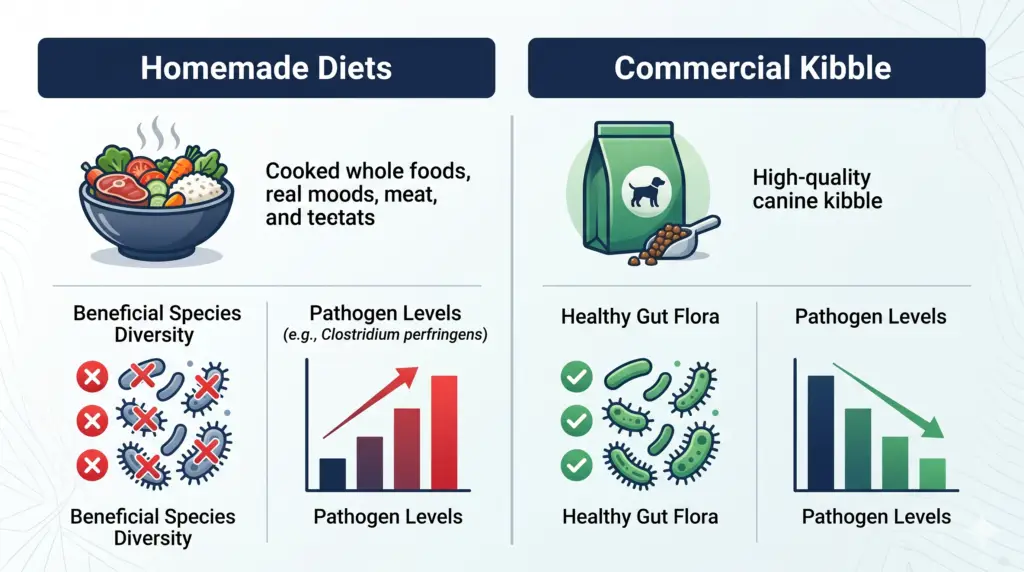
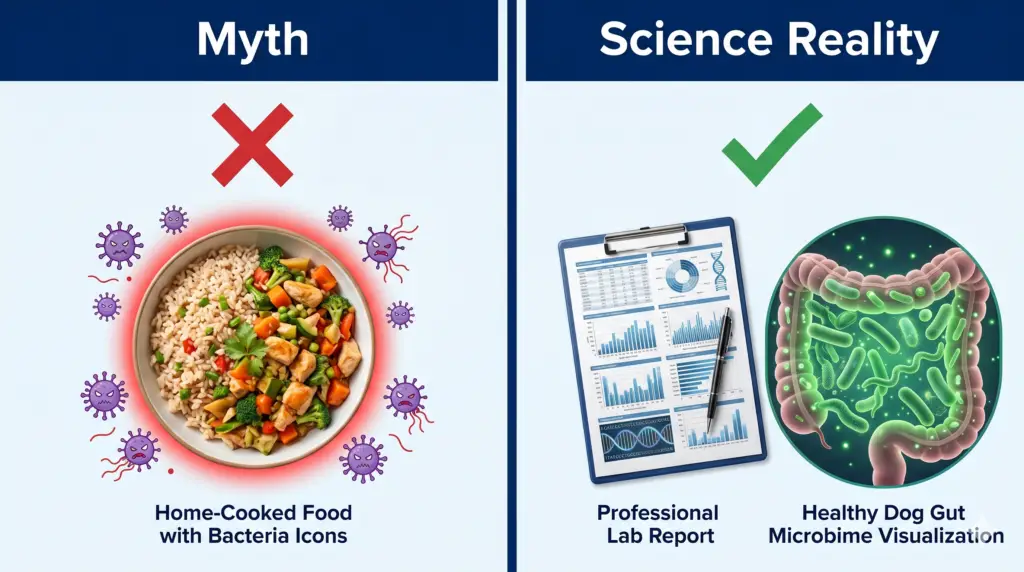
It sounds logical: “whole foods” must be better, right? However, a recent bioRxiv study mapping the canine microbiome found a shocking trend.
- The Risk: Dogs fed homemade diets (raw or cooked) had significantly lower levels of five beneficial microbial species.
- The Danger: Even more concerning, these dogs showed much higher levels of Clostridium perfringens—a notorious pathogen linked to severe diarrhea and gut issues.
- The Verdict: Unless formulated by a board-certified veterinary nutritionist, your home-cooked meal might be creating a microbial imbalance that invites pathogens into your dog’s gut.
Myth 2: “Large and Small Dogs Age at the Same Biological Rate”
The Scientific Reality
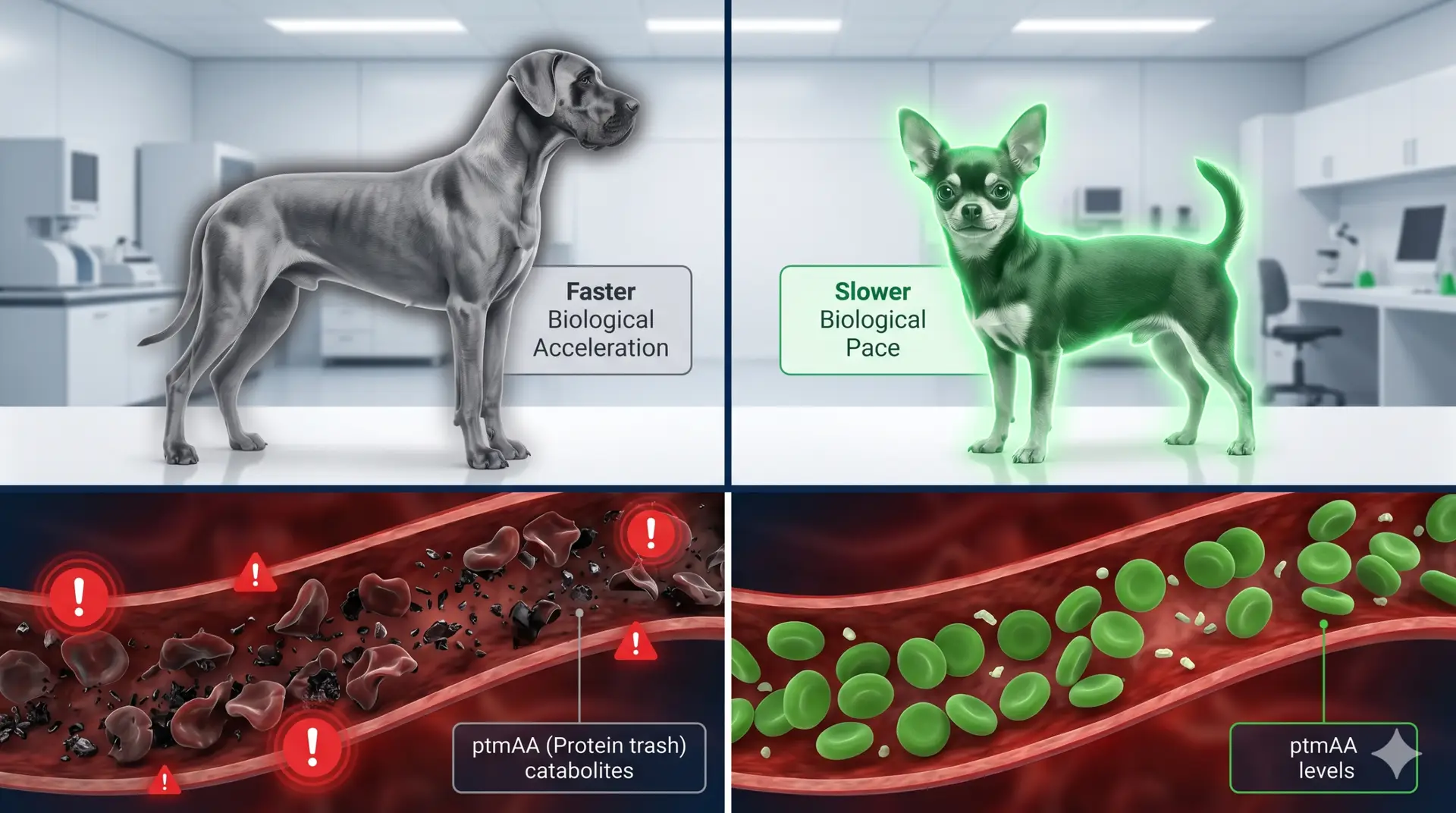
We know Great Danes live shorter lives than Chihuahuas, but we used to think it was just “wear and tear.” A landmark 2025 study published in Aging Cell proves it’s far deeper than that.
- The Proof: Body weight explains 7.0% of the variation in a dog’s blood chemistry—even more than age itself (5.8%).
- The Verdict: Large dogs aren’t just “bigger.” Their blood biochemistry is fundamentally different. They are biologically “accelerating” from a young age, which is why giant breeds face aging milestones twice as fast as small breeds.
Myth 3: “Every Dog Is Officially ‘Senior’ at Age 10”
The Scientific Reality

Using a single number to define “old” is a relic of the past. The DAP Precision Cohort has moved toward “Life Stage” classification that is adjusted for size and individual biology.
- The Clock: Scientists have developed a “Metagenomic Clock” that analyzes gut bacteria composition to estimate true biological age.
- The Verdict: Two 10-year-old dogs can have completely different biological ages. One might have the gut profile of a vibrant 7-year-old, while the other is biologically much older. Biological age—measured by biomarkers—is the only number that truly matters for their health.
Myth 4: “Poop-Eating (Coprophagia) Is Just a Disgusting Behavioral Habit”
The Scientific Reality
While it’s certainly unpleasant to witness, science suggests there is a real biological driver behind this behavior.
- The Discovery: Large-scale microbiome analysis shows that dogs who eat feces have significantly higher microbial diversity (measured by Shannon diversity index).
- The Verdict: This behavior introduces a massive influx of environmental microbes into the dog’s system. While not recommended due to parasite risk, it highlights a dog’s instinctive drive to enrich their gut’s “bacterial ecosystem” when it feels depleted.
Myth 5: “Kidney Decline Is Just an Inevitable Part of Being an Old Dog”
The Scientific Reality
We used to think kidneys simply “wore out.” But Aging Cell research reveals that the buildup of ptmAA (protein catabolites) in the blood is what actually signals this decline—often long before traditional diagnostic tests catch it.
- The Verdict: By monitoring specific “protein trash” biomarkers in the blood, we may be able to spot the molecular signature of kidney aging early enough to intervene with targeted diet changes or supplements such as Rapamycin.
Checklist: Is Your Dog Biologically Young?
Use this science-backed checklist to gauge your dog’s true biological health:
| Indicator | Science-Backed Goal |
|---|---|
| Microbiome | High diversity (presence of Prevotella and Holdemanella species) |
| Blood Profile | Low ptmAA levels (minimal protein “trash” buildup) |
| Physical Stature | Lean body mass (reducing overall metabolic load) |
Sources: Dog Aging Project (DAP) Precision Cohort; Aging Cell (2025); bioRxiv canine microbiome mapping study.




2 Comments