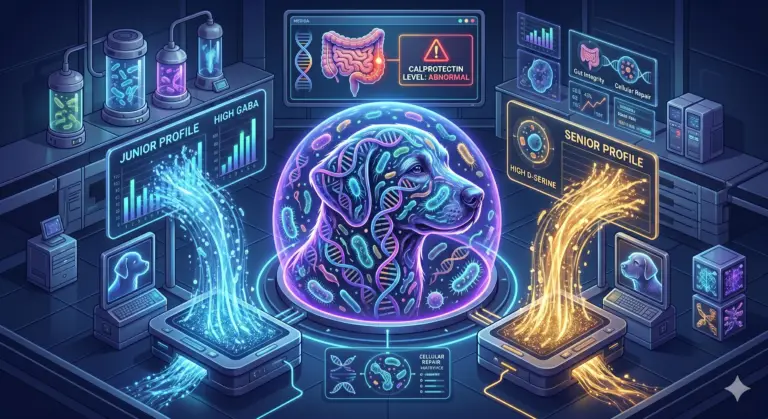
Beyond Rapamycin: The Future of Dog Longevity and the “Exercise Paradox”
We are officially entering the era of “Biological Hacking” for our pets. While the world has been focused on the Dog Aging Project, a groundbreaking narrative review in the Journal of Veterinary Science (2025) has revealed that the horizon of canine longevity is expanding far beyond a single molecule.
Science is now identifying a suite of “Geroprotectors”—compounds designed to target the root causes of aging. However, as we push the boundaries of life extension, researchers have uncovered a startling “Paradox” that every active dog owner must understand.
The New Arsenal: Top Geroprotectors for 2025
While Rapamycin remains the most famous, other molecules are showing clinical promise in extending the “Healthspan” of our senior companions.
Table 1: Leading Anti-Aging Compounds in Canine Research (JVS 2025)
| Compound | Mechanism of Action | Evidence Level | Primary Benefit |
| Rapamycin | Inhibits mTORC1; triggers cellular cleanup (autophagy). | High (Clinical) | Rejuvenates cardiac function and repairs muscle stem cells. |
| Metformin | Activates AMPK; reduces oxidative stress & inflammation. | Moderate | Improves insulin sensitivity and protects the heart. |
| NAD+ Precursors | Boosts cellular energy (ATP) and DNA repair. | High (Clinical) | Enhances cognitive function and reduces physical frailty. |
📊 Scientific Citation:
“Metformin has been shown to reduce apoptosis and improve insulin resistance in canine heart failure models, while NAD+ precursors significantly enhance quality of life without notable side effects.” (Lim et al., Journal of Veterinary Science, 2025).
The 25% Rule: The Power of Dietary Restriction
Before reaching for a pill, science confirms that the most robust “biohack” is still Dietary Restriction (DR). The 2025 data synthesizes decades of research showing that a 25% reduction in caloric intake fundamentally re-regulates the immune system. This process, known as fighting immunosenescence, is currently the most proven way to delay chronic age-related diseases in dogs.
The “Friends or Foes” Paradox: Exercise vs. Longevity Pills
This is the most controversial discovery in recent canine geroscience. We have long assumed that “Exercise + Supplements = Better Results.” The 2025 research suggests a direct conflict.
Science calls this the Age-Reversal-Age-Extension Paradox:
- The Metformin Conflict: Metformin appears to blunt the positive mitochondrial adaptations that cells naturally make during aerobic exercise.
- The Rapamycin Conflict: Because Rapamycin is a powerful inhibitor of the mTOR pathway, it can actually block the muscle protein synthesis required for hypertrophy and regeneration after intense physical activity.
The Clinical Warning: If your dog is highly active or an “athlete,” certain anti-aging medications might actually prevent their muscles from gaining the full benefits of their workout. Longevity is a delicate balance between pharmacological intervention and natural physical stress.
Summary: The Personalized Future of Aging
The future of canine longevity is not a “one size fits all” pill. It is a calculated balance between pharmacology (clearing cellular debris) and lifestyle (maintaining muscle and heart health through activity).
References & Further Reading
Lim, J. R., Yoon, J. H., & Han, H. J. (2025). Anti-aging strategies for dogs: current insights and future directions. Journal of Veterinary Science, 26(S1), S199-S219. https://doi.org/10.4142/jvs.25202